
US Tariffs Unlikely to Impact Indian Pharma and Steel Exports, Say Industry Leaders
Although the US government has not announced any specific levies on pharmaceutical imports, it has signaled a 25% tariff on steel products from foreign countries.
- By Newsdesk
- New Delhi
- Feb 17, 2025
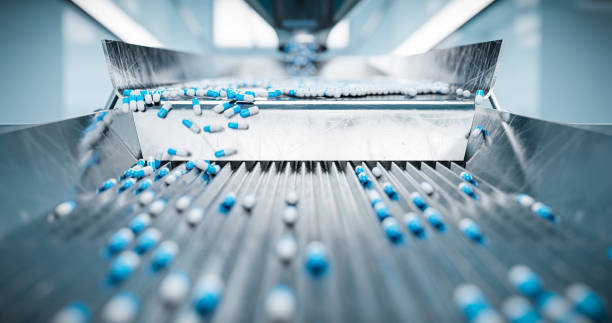
Indian pharmaceutical and steel manufacturers remain largely unperturbed by the looming US trade tariffs, with key industry figures expressing confidence in the resilience of Indian exports to the American market.
Dilip Shanghvi, Managing Director of Sun Pharma, believes that Indian pharmaceutical exports serve a critical role in the US economy by helping control healthcare costs. Speaking at a summit on ‘Global Winds and India’s Destiny: Is India Truly Resilient?’, he remarked, "Many of the products we supply to the US are essential for keeping healthcare expenses in check. Given recent statements, it appears that certain exemptions will be made, meaning some products may not be affected by the tariffs."
Although the US government has not announced any specific levies on pharmaceutical imports, it has signaled a 25% tariff on steel products from foreign countries. However, Jindal Steel and Power Chairman Naveen Jindal dismissed concerns, highlighting that Indian steel has long been subject to heavy duties in the US.
"It may come as a surprise, but many steel products already face tariffs exceeding 200%. India, being the world’s second-largest steel producer, primarily caters to domestic demand. If the 25% tariff is implemented while simultaneously removing anti-dumping and countervailing duties, it could actually work in our favor," Jindal explained.
Competitive Edge and Industry Resilience
Both Shanghvi and Jindal emphasized India’s strong export competitiveness, with Shanghvi noting that the generic pharmaceutical sector has already undergone price adjustments in recent years. "If tariffs are introduced, much of the cost will ultimately be borne by consumers. India’s advantage in manufacturing is long-term and not easily eroded. Even if production starts in the US, setting up pharmaceutical manufacturing takes 5-7 years, so there will be no immediate impact," he added.
While Jindal acknowledged that US tariffs might not directly harm Indian steel exports, he warned of potential indirect consequences. "As the second-largest steel producer globally, India operates highly competitive, state-of-the-art plants. However, with US tariffs in place, countries that were exporting to America might redirect their supplies to India, leading to an increase in local market competition," he cautioned.
Pharma Industry’s Strategic Position
Shanghvi further pointed out that the US government's focus on making medicines more affordable gives Indian pharmaceutical firms an advantage, especially as American pharmaceutical giants face scrutiny over high drug prices.
"In the US, discussions across political parties revolve around reducing drug prices, which is a greater concern for large American pharma companies than tariffs on imports. Since the US accounts for over 50% of global pharma consumption, any pricing changes there will have a larger impact on them than on us," he explained.
Growth Prospects for Steel and Pharma
Both industry leaders expressed optimism about their companies' future growth. Jindal highlighted that India's steel and power sectors are in expansion mode, driven by rising domestic demand. "India’s per capita steel consumption is still just 100 kg compared to the global average of 200 kg. Similarly, power consumption in India stands at 1,100-1,200 kWh per person, whereas in the US, it is around 15,000 kWh. As India continues to develop, demand for steel and power will surge to support infrastructure and housing," he stated.
Shanghvi echoed a similar sentiment regarding Sun Pharma’s long-term strategy. "We focus on investments across short-, medium-, and long-term horizons, ensuring continuous growth. Historically, we have achieved a compounded annual growth rate of 25%, and we aim to sustain this momentum," he affirmed.
With the Indian pharma and steel industries maintaining their robust outlook, it appears that the potential impact of US tariffs may be far less significant than initially feared.