
India Unveils Home-Grown CAR-T Cell Therapy, Setting a New Milestone in Cancer Immunotherapy
This development highlights India’s growing scientific leadership in one of the most advanced frontiers of medicine. By bringing CAR-T therapy within reach for Indian patients, the country not only strengthens its domestic biotech ecosystem but also offers renewed hope for those battling hard-to-treat cancers. It marks a transformative step toward a future where “Made in India” stands for pioneering, life-changing innovation.
- By Newsdesk
- New Delhi
- Nov 06, 2025
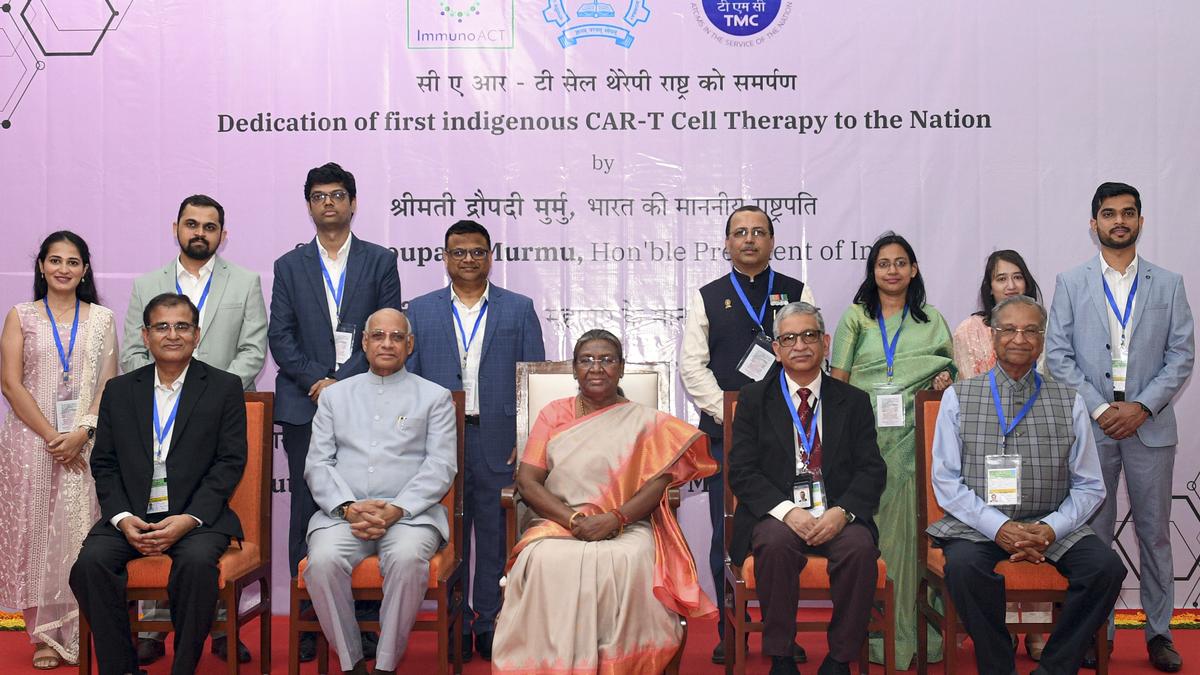
In a landmark moment for the biotech sector, India has launched its first fully indigenous CAR-T cell therapy, called NexCAR19, developed by the spin-off company ImmunoACT emerging from IIT Bombay through its incubation arm SINE, with support from the Department of Biotechnology (DBT) and the Biotechnology Industry Research Assistance Council (BIRAC).
The announcement was made by Prime Minister Narendra Modi at the Emerging Science, Technology & Innovation Conclave (ESTIC) 2025, where the therapy was showcased alongside India’s quantum-security chip and a 25-qubit quantum processing chip, underscoring the government’s ambition to advance cutting-edge technologies across sectors from biotech to quantum computing.
CAR-T (chimeric antigen receptor T-cell) therapy reprograms a patient’s own immune cells to recognise and destroy cancer cells, particularly effective in treating blood cancers such as acute lymphocytic leukaemia (ALL). NexCAR19 is being described as India’s first “living drug” of its kind, built to international standards but entirely developed and manufactured domestically. The innovation aims to make advanced cancer therapies more affordable and accessible to Indian patients who have historically struggled with high treatment costs.
The therapy was pioneered in collaboration with the Tata Memorial Centre (TMC) and IIT Bombay, with initial clinical trials targeting paediatric ALL conducted at the TMC’s ACTREC facility in 2021 under DBT and BIRAC’s licensing support. DBT’s BioE3 policy and biomanufacturing initiatives have also funded ImmunoACT’s establishment of a 200-litre GMP lentiviral vector and plasmid production platform, a critical step toward scaling up gene-delivery manufacturing to serve up to 1,000 patients annually.
With NexCAR19, India joins an elite group of nations capable of developing advanced cell and gene therapies. This marks a significant stride toward self-reliance in biopharma innovation while addressing cost and accessibility barriers that often restrict such therapies to only a few. DBT and BIRAC are also promoting further translational research for similar treatments targeting other cancers, including multiple myeloma, refractory B-cell leukaemia, and glioblastoma, while simultaneously working to mitigate therapy-related toxicities.
This development highlights India’s growing scientific leadership in one of the most advanced frontiers of medicine. By bringing CAR-T therapy within reach for Indian patients, the country not only strengthens its domestic biotech ecosystem but also offers renewed hope for those battling hard-to-treat cancers. It marks a transformative step toward a future where “Made in India” stands for pioneering, life-changing innovation.