
India’s $10 Billion Pharma Exports to US Under Scrutiny Amid Rising Trade Tensions
The impact of the investigation could vary widely across Indian drugmakers, depending on their exposure to the U.S. market. According to research by Nuvama, Gland Pharma and Aurobindo Pharma generate about half of their revenue from the U.S., while Dr. Reddy’s Laboratories, Zydus Lifesciences, and Lupin earn between 38% and 45% from the American market. Major players such as Glenmark, Sun Pharma, Cipla, and Torrent Pharmaceuticals also maintain a considerable U.S. presence.
- By Newsdesk
- New Delhi
- Apr 18, 2025
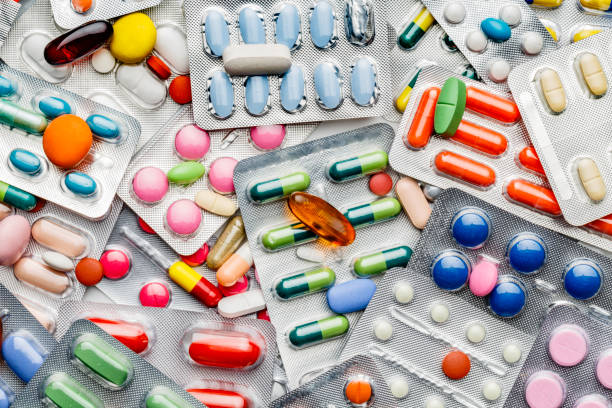
India’s thriving pharmaceutical trade with the United States — valued at nearly $10 billion annually — is now facing uncertainty as Washington ramps up scrutiny over the national security implications of medical imports. On Monday, the U.S. Department of Commerce launched an investigation to evaluate whether the country’s reliance on foreign-made drugs and their ingredients could compromise its healthcare resilience.
The probe, initiated under Section 232 of the Trade Expansion Act, empowers the U.S. government to assess whether specific imports pose a threat to national security. This same provision has previously been used to impose tariffs on steel and aluminum — sectors deemed vital to U.S. interests.
India ranks among the top five pharmaceutical suppliers to the U.S., alongside powerhouses like Ireland, Germany, and Switzerland. Between 2015 and 2023, India’s share of U.S. pharmaceutical imports nearly doubled from 6% to 11%, with its products spanning both finished medications and active pharmaceutical ingredients (APIs). In 2023 alone, India exported close to $10 billion worth of pharmaceutical goods to the U.S., out of the country’s total pharma imports of approximately $170 billion.
While Ireland and Germany maintain a larger market share — 28% and 21% respectively — India’s rapid rise has cemented its position as a key player in the U.S. drug supply chain. However, the newly announced probe signals a growing willingness by American policymakers to challenge this dependency, a stance driven in part by former President Donald Trump's calls to bring pharmaceutical production back to domestic soil.
The move comes as part of a broader reassessment of critical supply chains, which also includes a parallel investigation into semiconductor imports. Until now, pharmaceuticals had largely been spared from trade barriers, owing to their life-saving role and humanitarian significance. But that calculus appears to be changing.
A significant portion of India’s pharmaceutical exports to the U.S. consists of generic drugs — a category that underpins the American healthcare system and delivers estimated annual savings exceeding $400 billion. Even though China exports only around $2 billion in pharmaceuticals to the U.S., any shift in trade policy, such as new tariffs or restrictions, could disrupt existing supply chains and drive up drug costs.
The impact of the investigation could vary widely across Indian drugmakers, depending on their exposure to the U.S. market. According to research by Nuvama, Gland Pharma and Aurobindo Pharma generate about half of their revenue from the U.S., while Dr. Reddy’s Laboratories, Zydus Lifesciences, and Lupin earn between 38% and 45% from the American market. Major players such as Glenmark, Sun Pharma, Cipla, and Torrent Pharmaceuticals also maintain a considerable U.S. presence.
As the probe unfolds, Indian pharmaceutical companies — along with their global counterparts — will be closely watching for signals of potential policy shifts that could reshape one of the world's most vital healthcare trade corridors.