
India can become a major destination for medical tourism: Dr Bishnu Panigrahi
Dr. Panigrahi, Group Head for Medical Strategy and Operations at Fortis Healthcare, talks about accessible healthcare, value-based medical travel, and how the future of India’s healthcare looks promising
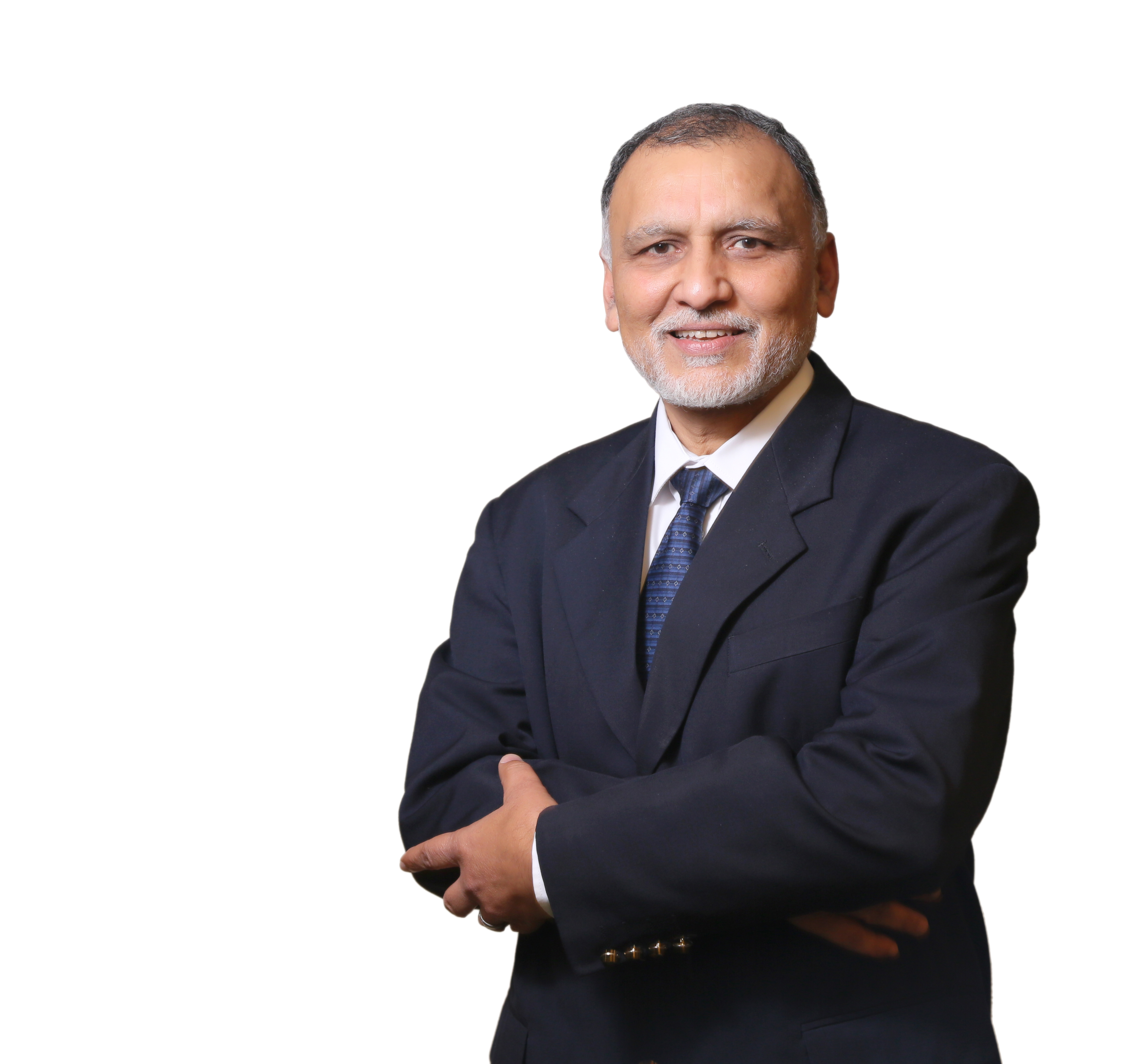
From up-scaling India’s medical exports to the prominence of digital healthcare in the rural areas, and why it is a wise decision to invest in India’s healthcare-- Dr Bishnu Panigrahi, M.D., the Group Head for Medical Strategy and Operations at Fortis Healthcare, one of the largest healthcare companies in India, holds an optimistic vision when it comes to the future of the Indian healthcare sector. Edited excerpts:
In its G20 Presidency, India spoke for equitable access to healthcare, along with value-based health-care system. What according to you are the parameters of value based health-care system?
The healthcare system has been very episodic till date. It means that when a person falls sick, he or she goes to the doctor, the procedure is done and then there is no follow-up. Value-based healthcare system is something that the world is trying to catch up on. The persons who have championed the value-based healthcare are Professor Michael E. Porter and Thomas H. Lee from the Harvard Business School. They stress on care-continuum and follow-up after the initial engagement with the patient is over. For instance, a person with diabetes had come and taken the treatment, but following up on the diabetes-care requires checking the patient’s eyesight, or urine to see whether the kidneys are functioning well, and so on.
Fortis healthcare has taken its initial steps towards the value based healthcare. We are associated with ICHOM (International Consortium for Health Outcomes Measurement) to use their global standard sets of outcome and measurement tools which helps us in measuring the functional status of the patient post their discharge. And thus, the Indian presidency is not speaking about the value-based healthcare in isolation; rather it is a global scenario that has cropped up and we have to move towards it.
But capturing such vast amount of data and then following up is a huge challenge in itself?
At Fortis, for instance, we capture the coronary-artery-disease (CAD) outcome, which includes data on the conducted bypass surgery and angioplasty. We also capture our knee replacement outcomes, and our kidney transplant outcomes. So using this data, we are able to monitor the one year graph of the patient post the procedure. The data helps us to check the success of our healthcare procedures, as well as the steps that need to be taken further.
Capturing the health-data of the entire country will be immensely helpful, in my view. The digital health mission initiative by the Government of India--as and when its final roll-out will happen--will increase people’s portability. So a patient can visit either a private or a public hospital, the concerned doctor can access the data with the patient’s permission, and will have a complete overview of their health status including anytime they had encountered the doctor anywhere.
What about the health inequities, especially in the rural areas? In a past interview you have mentioned that it is time to move into “Bharat instead of India and build a healthcare workforce in rural areas.”
According to me major cities like Delhi, Bombay, and Calcutta are India, whereas the smaller towns constitute Bharat. In this regard, we needed to follow the recommendations made by the 1946 Health Survey & Development Committee, set up by Sir Joseph Bhore, as the complete road map for a well functioning healthcare system. However, we have flipped up on our public health system in all these years, and as a result there are a lot of common diseases that are still prevalent in India.
The primary health centers are where I am talking about Bharat. There has to be a functional primary health center within a certain radius in smaller cities. Then there are secondary health centers with slightly upgraded facilities. There is a strong need to man these primary and secondary health centers and for that we need to make ‘the three years rural health service’ compulsory in our MBBS programs and see that they are being followed up thoroughly, and not just on papers. This will provide the much needed check and balance for these centers, and thus will take care of our primary health care needs in the rural and small cities of our country.
In this context, the ASHA (Accredited Social Health Activist) initiative, employed by the Ministry of Health and Family Welfare as a part of India's National Rural Health Mission, has replicated very well across the network. These women activists are trained to act as health educators and health promoters in their communities, which also includes taking care of the would-be mothers--an extremely important factor for any country’s health policy. The southern states like Kerala, Tamil Nadu and Andhra Pradesh are setting up great examples in this regard. This showcases that the issue of inequity will be addressed to a greater extent if the primary and secondary health care systems are properly taken care of.
The issue of health insurance and paying out of pocket also contribute in such inequities?
Yes, because not everyone has a fat pocket. Initiatives like Ayushman Bharat, (a National Health Protection Scheme that provides coverage up to Rs 5 lakhs per family, per year, for secondary and tertiary care hospitalization), is a great idea. Although, it is still a work in progress! But such schemes provide a safety net to the people who can’t afford expensive treatments. There are already public hospitals but the private hospitals will also come on board under Ayushman Bharat. As a result, you will have a lot of people who will be accessing health care at affordable costs.
Is digital healthcare becoming a reality in India?
Yes. For instance, prevalent diseases of our times, like diabetes and hypertension, can be consulted online with the respective doctors using tele-medicine. Also, India is one of the largest users of smart phones.
However, the right kind of communication has to happen in order to enable the digital healthcare properly. I believe it won’t take much time for people to get used to it. For instance, if you have a proper system for a person to login and find a respective doctor, a lot of things can be attended just over the phone without the need to go to a hospital. This will be beneficial for the people who live far away from the main cities and towns. Technology can be a great enabler when it comes to healthcare and India is in a sweet-spot. We just need to get our act together!
Sweet spot for India is also secured with positives like manufacturing capacities and innovations..Do you see India becoming a leading global player when it comes providing quality health-care services?
As Indians we can hold our heads high for we are providing good health services with some cutting edge technology, be it the high end cardiac surgeries, the neuron surgeries, the transplants, the cancer care and more. In addition to that, we now have one of the world’s largest pharmaceuticals markets blooming in India. Our vaccine drive during the Covid pandemic was a huge success worldwide. And thus it is not ambitious to believe that soon India will be manufacturing and exporting top quality medical instruments.
Also, India has a great potential to become a major destination for medical tourism. In fact, the medical value travel is a great opportunity to earn foreign exchange and put India on the world map. But to enable something like this, we need to have expansion across the healthcare sector for which an infusion of capital is required. The costs of functioning of any hospital, besides the treatment, also include the cost of its land, the equipments and their regular maintenance and replacements, providing right kind of doctors, specialists, and staff, and so on. The loans taken for building the hospitals and the interests on these loans, also add up to these costs. Hence, we need a strong support system and initiatives such as Production Linked Incentive (PLI) Schemes, which will help us to create a world-class infrastructure to invite foreign citizens to come to India for their medical treatments. And I believe, if given such support, the private hospitals will scale up very quickly to provide the best contemporary and competent health-care in the world. So overall, things are looking bright, and it will be a wise choice to invest in India’s healthcare sector.