
Health Minister J.P. Nadda Says India Set to Anchor and Reshape Global Pharma Supply Chains
At the 11th Global Pharmaceutical Quality Summit in Mumbai, Union Health Minister J.P. Nadda highlights India’s transition from a “pharmacy of the world” to a “global innovation hub,” calling for quality-driven leadership, tech-enabled manufacturing and strategic policy support to strengthen global healthcare supply chains.
- By PharmaNews Live Desk
- New Delhi
- Feb 23, 2026
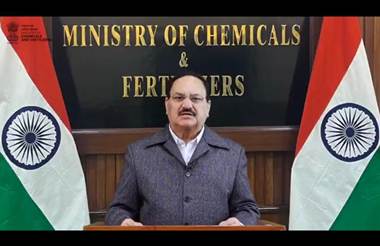
Union Health Minister J.P. Nadda on Monday called on India’s pharmaceutical industry to transition from being known primarily as the “pharmacy of the world” to becoming a central anchor of global supply chains and innovation ecosystems.
Addressing industry delegates and policymakers at the 11th Global Pharmaceutical Quality Summit in Mumbai via video message, the minister underscored the importance of quality, reliability and innovation in securing long-term global healthcare resilience.
“India is transitioning from the ‘pharmacy of the world’ to a global innovation hub,” Nadda said, noting that this evolution is supported by a robust policy framework focused on healthcare security, manufacturing resilience and scientific excellence.
Policy Initiatives to Drive Growth and Innovation
Highlighting key government interventions, Nadda drew attention to the Biopharma Shakti initiative, a flagship programme with an outlay of ₹10,000 crore, aimed at establishing India as a global biopharmaceutical manufacturing hub. The initiative is designed to strengthen domestic production capacity, expand research infrastructure and catalyse high-value biotech manufacturing capabilities.
He also pointed to the PRIP (Promotion of Research and Innovation in Pharma MedTech) scheme, which supports innovation across complex generics, vaccines and advanced medical technologies.
“Emerging technologies — particularly responsible use of artificial intelligence — will be key in enhancing predictive diagnostics, pharmaceutical traceability, pharmacovigilance and overall quality systems,” Nadda added, urging industry stakeholders to embed quality as a core value, not just a compliance exercise.
Quality and Technology at the Heart of Global Leadership
Nadda emphasised that for India to anchor global supply chains effectively, pharmaceutical manufacturers must strengthen quality systems, adopt cutting-edge technologies and invest strategically in human resources and infrastructure.
“Quality must be embedded as a core organisational value rather than treated merely as a compliance requirement,” he said, pointing to the role of next-generation tools such as AI and predictive analytics in fortifying quality assurance and regulatory compliance.
Beyond Volume: Towards Innovation-Led Pharma Growth
Building on India’s historic strengths in generics and vaccine supplies, the minister urged the industry to focus on innovation that can address complex health challenges, expand research capacities and drive global competitiveness.
“We need to transition from volume-driven growth to capability-led innovation,” he stated, reinforcing the government’s vision for India to be a global pharmaceutical leader that combines scale with trust and innovation with collaboration.
Industry analysts note that India currently supplies medicines to more than 200 countries, meeting major portions of generic drug demand in key markets and producing a significant share of global vaccines — accomplishments that form a solid foundation for building a more resilient and diversified supply chain ecosystem.
Strengthening Healthcare Security and Global Resilience
Nadda’s address comes amid global calls for diversified and reliable healthcare supply chains in light of recent geopolitical and pandemic-related disruptions. By combining government support, private sector innovation and a “quality-first” mindset, India aims to continue playing a critical role in ensuring affordable, accessible and high-quality medicines for populations worldwide.
With initiatives such as Biopharma Shakti and PRIP aligned with global best practices, policymakers and industry leaders alike view this trajectory as pivotal in reinforcing India’s role not only as a manufacturing powerhouse but as a trusted global partner in healthcare supply chain leadership.