
First synthetic human ’embryo’ created: Scientists
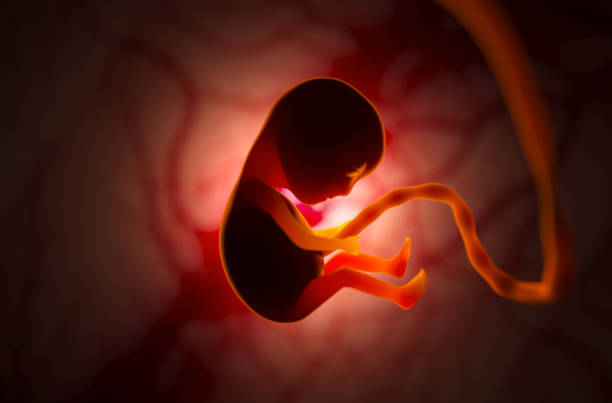
According to research, embryo-like structures will lack organs such as a beating heart or a brain, but will contain cells that would normally form the placenta, yolk sac, and the embryo itself.
Scientists claim to have created the world's first human synthetic embryos using stem cells rather than sperm or eggs.
These embryo-like structures lack organs like a beating heart or a brain, but they do contain cells that would normally form the placenta, yolk sac, and embryo itself.
"We can create human embryo-like models by reprogramming [embryonic stem] cells," said Professor Magdalena Zernicka-Goetz of the University of Cambridge and the California Institute of Technology in a speech at the International Society for Stem Cell Research annual meeting in Boston on Wednesday.
This study, which has yet to be published in a journal, raises legal and ethical concerns, as many countries lack regulations governing the creation and manipulation of synthetic embryos.
"In contrast to human embryos derived from in vitro fertilisation (IVF), which have a well-established legal framework, there are currently no clear regulations governing stem cell-derived human embryo models." "There is an urgent need for regulations to provide a framework for the creation and use of stem cell-derived human embryo models," said James Briscoe, associate research director at the Francis Crick Institute, in a statement to CNN.
Zernicka-Goetz's team and the Weizmann Institute in Israel demonstrated in 2022 that stem cells from mice could self-organize into early embryo-like structures with features such as an intestinal tract, the early stages of a brain, and a beating heart.
Since then, teams have raced to replicate the results using human cells.
Zernicka-Goetz described cultivating the embryos to a developmental stage just beyond the equivalent of 14 days for a natural embryo at the conference on Wednesday.
"Our human model is the first three-lineage human embryo model that specifies amnion and germ cells, as well as precursor cells of egg and sperm," Zernicka-Goetz explained to the Guardian.
"It's stunning and made entirely of embryonic stem cells."
Catch up on all of our coverage of the region in one place.
According to Roger Sturmey, senior research fellow at the University of Manchester, much work remains to be done "to determine the similarities and differences between synthetic embryos and embryos that form from the union of an egg and a sperm."
"This work from Zernicka-Goetz hasn't yet been fully appraised by the scientific community, but it does offer exciting prospects for answering these questions and may provide an important tool for studying early development while reducing reliance on human embryos for such research," he said.